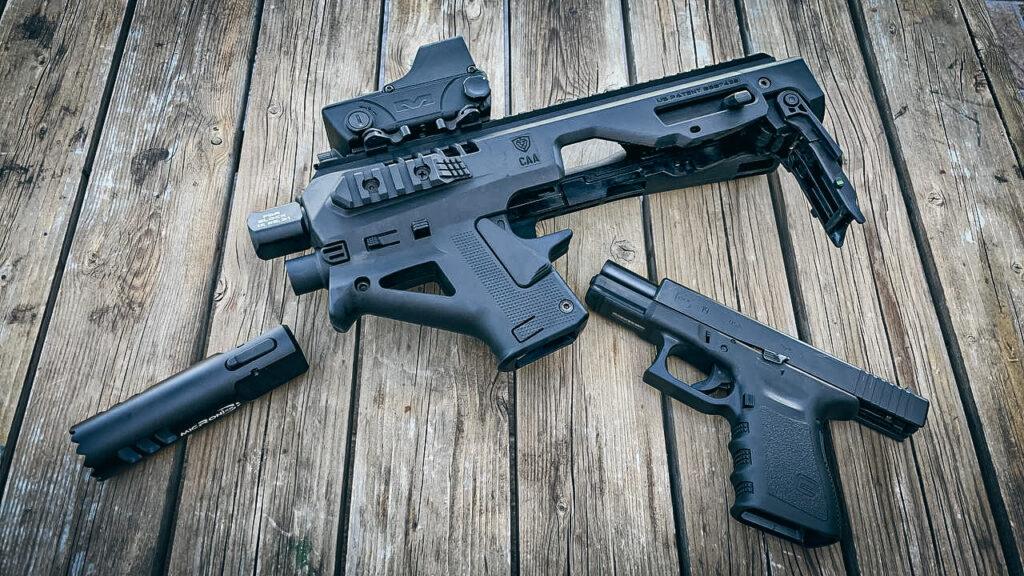
Federal law provides the foundation for firearm regulation in the United States, but it does not tell the whole story. Each state carries independent authority to regulate firearms and accessories within its borders, and that authority produces a patchwork of laws that can differ dramatically from one jurisdiction to the next. For anyone exploring accessories for their handgun, understanding that the glock 19 conversion kit may be treated very differently depending on where you live is a critical starting point.
Why do state laws on conversion kits vary so widely?
The United States federal system grants states significant latitude in legislating matters of public safety. While the Second Amendment protects individual rights, it does not prevent states from imposing reasonable restrictions on specific categories of firearms or accessories. As a result, a conversion kit that is commercially available in one state may be classified as a prohibited weapon accessory in another. These differences are not minor technicalities—they carry real legal weight.
Which states impose the strictest regulations on conversion accessories?
Several states have enacted broad restrictions on firearm modifications that go beyond federal requirements. States with comprehensive assault weapons laws or strict handgun modification statutes often include language that captures conversion kits within their prohibited accessories lists. California, New York, New Jersey, Massachusetts, and Hawaii are among the states known for particularly stringent firearm accessory regulations. However, the specific legal language in each state differs, and owners should never rely on general reputation alone when assessing legality.
What happens if someone travels across state lines with a conversion kit?
Interstate travel with firearm accessories carries its own legal complexity. The Firearm Owners Protection Act of 1986 provides some federal protection for travelers transporting legally owned firearms through states where those firearms might otherwise be prohibited—but this protection applies under specific conditions and does not extend universally to all accessories or modification kits. Traveling through a state where a particular conversion kit is prohibited could expose the owner to legal risk, even if the device is lawfully owned in the home state.
How can local ordinances add another layer of complexity?
Beyond state law, certain municipalities have enacted local firearm ordinances that further restrict ownership or use of specific accessories. Cities with high firearm regulation histories have, in some cases, created local rules that exceed even state-level restrictions. A firearm owner who complies with state law may still find themselves in violation of a local ordinance without realizing it. Consulting local government resources or a local firearms attorney is advisable before assuming state-level compliance is sufficient.
What resources exist for understanding jurisdiction-specific regulations?
The ATF maintains public resources that outline federal law, but state-specific guidance requires consulting state statutes directly or working with a licensed attorney. Many state bar associations have attorneys who specialize in firearms law and can provide jurisdiction-specific advice. Additionally, state police or department of public safety websites often publish accessible summaries of current firearm regulations, including restrictions on accessories and modifications.
Can purchasing from a licensed dealer guarantee legal compliance in all states?
Not always. A federally licensed dealer operates under federal law, which sets minimum standards. If a device is federally legal but prohibited under state law, the dealer’s federal license does not insulate the buyer from state prosecution. The responsibility for understanding and complying with state and local law rests with the purchaser. Asking a dealer about the device’s status under federal law is a useful step, but it should not replace independent verification of state-specific rules.
What is the most responsible approach for firearm owners navigating this complexity?
Legal awareness is an ongoing responsibility, not a one-time exercise. Firearm owners should treat jurisdiction-specific research as a routine part of any accessory purchase decision. Seeking qualified legal advice, verifying current statutes, and maintaining documentation of lawful purchases are habits that reflect the standard of care that responsible ownership demands.